It is very common for students and parents to build a shortlist of universities and
countries before knowing the facts. Studying abroad is one of the biggest investments you
will ever make as a student or a parent and this decision must be an informed choice.
These four countries are the most popular study destinations for students across the world
but they differ on how long the degree takes, what a graduate is allowed to do post
graduation, and how likely the visa is to be granted. These are key factors that must be
taken into consideration and they are more important than the university rankings.
The UK, the USA and Canada are usually on the shortlist. Australia is sometimes added
later. The shortlist is built on perception, reputation, on where a cousin went, and on what
an agent suggested, and none of those things describe what the four countries actually
differ on.
They differ on four things. How long the degree takes to complete and what it costs in
total. What a graduate is allowed to do after completing the degree. How likely the visa is
to be granted for the passport the student holds. And whether the country intends for the
student to stay afterwards. Each of those four factors has a larger effect on the investment
and the outcome.
Course length is an important factor that decides the total cost of study
A bachelor degree in the UK usually runs for three years. In the USA and in Canada it
usually runs for four. In Australia it runs for three years in many fields and four where
the course carries an honours year or a professional accreditation. A masters by coursework
in the UK is commonly one year. In Australia it is commonly one and a half to two years, and
in the USA and Canada it is commonly two.
That difference compounds across the degree. A family comparing an annual fee in one
country against a lower annual fee in another is comparing the wrong numbers if one course
runs for three years and the other runs for four. The shorter course also brings forward the
date the student starts earning, which changes how quickly the family recovers what it
spent.
Take the published fee, multiply it by the number of years the course actually runs, and
add the living cost for the same number of years. Compare those totals instead of comparing
the annual fees. I have set out how to build that total for Australia in
a separate note on the cost to graduation,
and the same method works for the other three.
What a graduate is allowed to do after completing their studies
This is the part of the comparison that changes most often and is heavily dependent on the
government policies of the host country. It is also the part that is most likely to be out of
date, including in this article.
- The United Kingdom. The Graduate route allows a graduate to work for
any employer, in any role, without a sponsor. For undergraduate and postgraduate
programs, it has been shortened to eighteen months for those applying from 1 January
2027, with three years retained for doctoral graduates.
- Australia. The Temporary Graduate visa, subclass 485, also allows a
graduate to work for any employer without a sponsor. Its length depends on the level of
the qualification, and additional time is available to graduates who study and live
outside the large metro cities.
- Canada. The Post-Graduation Work Permit allows open work for up to
three years and it feeds directly into the main route to permanent residence. Eligibility
for many college programs is tied to a government list of fields of study, so the course
a student enrols in determines whether the permit exists at all.
- The United States. Optional Practical Training allows twelve months of
work in the field of study, with a further twenty four months available to graduates of
designated science, technology, engineering and mathematics courses. Staying beyond that
period depends on an employer sponsoring a working visa that is allocated by lottery.
To summarise, in the UK and Australia a graduate can work for anyone. In Canada a graduate
can work for anyone provided the course qualifies in the first place. In the USA the work
must match the field of study, and whether the graduate can remain after it depends on an
employer and on a ballot.
Before committing to a course, confirm with the institution in writing that the specific
course leads to the post study work scheme in that country. Particularly in Canada, two
similar looking programs at the same college can produce different outcomes.
The visa decision depends on the passport as much as on the student
Refusal rates are published by each government, and they are not uniform. They vary by the
nationality of the applicant and by the country the application is lodged from, generally by
a wider margin than they vary by the strength of the individual application. Two students
with the same grades, the same offer and the same funds can face very different odds.
This matters in the Gulf because residence here does not change the assessment. A family
living in Dubai on an Indian, Pakistani, Bangladeshi or Nigerian passport is assessed
against the pattern for that nationality. It is worth asking how the destination country
treats applications lodged from the UAE, because that is not always the same as applications
lodged from the country of citizenship.
Before deciding where to study, ask what the refusal rate has been for that nationality in
that country over the last year, and ask what the refusals were actually for. The common
grounds are documented and most of them are addressable in advance, which is the reason to
ask early rather than after a refusal.
All four study destinations have tightened visa regulations and making a decision during uncertainty is challenging
Between 2024 and 2026, all four countries introduced measures that reduce or slow the number
of international students arriving. Canada set a national cap on study permits and reduced it
again for 2026. Australia set a national planning level for new commencements and directed
that visa processing priority follows how closely a provider stays within its allocation. The
UK raised application fees and shortened the Graduate route. The United States has moved to
replace open ended admission for the length of a course with fixed admission periods, which
adds further cost for students who need an extension.
What a family feels is not the policy itself. It is the longer processing time, the higher
chance of refusal, and the additional evidence requested half way through an application
that was already submitted.
Tightening visa policies is a cycle rather than a direction. Policy in all four countries
has loosened and tightened repeatedly over the last fifteen years, usually in response to
domestic housing and migration pressure rather than to anything about international students
themselves. A student starting a degree in 2027 will finish it in 2030 or 2031, by which
point the settings will have moved again. Current policy is worth understanding because it
decides whether the application succeeds. It is not the biggest reason to choose one country
over another for the long term.
What are the advantages of studying in each of the four countries?
Each of the four countries has its own advantages, and which country to choose is dependent
on the personal circumstances, goals and objectives of the student.
The United Kingdom
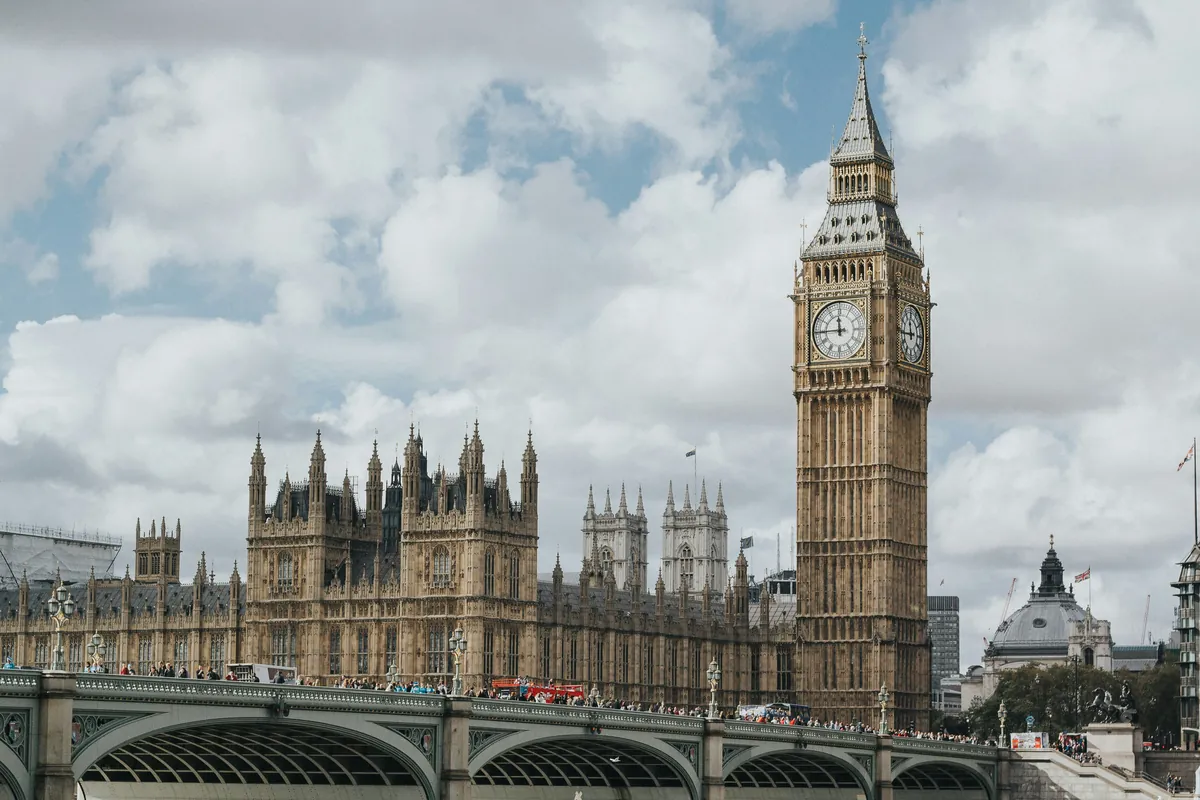
The shortest duration to obtain a degree of the four destinations, which often makes it the
lowest total cost even where the annual fee is not the lowest. It suits a student who wants a
recognised degree and intends to return to the region afterwards. It is the weakest of the
four on the route from a degree to settling permanently, and the Graduate route, which is the
work visa after study, has been shortened twice in recent years.
The United States

The deepest research funding and the widest range of institutions, from community colleges
to the best endowed universities in the world. It suits a student heading for a doctorate, or
one working in a field of labour market demand. It carries the highest total cost of the four
and the least certain route to staying, because that route runs through an employer and a
lottery rather than through the degree.
Canada

The most direct path from a degree to permanent residence of the four, and the reason many
families shortlist it. The path runs through the list of eligible fields of study, so the
course has to be chosen with the permit in mind from the start. Refusal rates for several
South Asian nationalities have risen sharply, so the application itself needs more care than
it did a few years ago.
Australia

Work rights during study, longer post study work than the UK for most qualifications, and
graduate employment and salary data published publicly by field of study, which very few
countries make available. The route to staying is slower than Canada's and more predictable
than America's. Living costs in Sydney and Melbourne are among the highest when compared to
any other student city in the four countries, and refusal rates for some nationalities have
risen along with everyone else's.
The question that changes the decision
There is one question worth answering before comparing anything else. Is the intention to
come back, or is the intention to stay?
If the student intends to return to the home country with a credential and start a career
there, the UK is frequently the strongest of the four, because the degree is short and the
total cost is lower. The post study work rules matter far less to a student who was never
going to use them.
If the intention is to build a life in the country, Canada offers the most direct route and
Australia offers the more predictable one. In both cases, the course has to be selected with
that outcome in mind rather than choosing first and figuring out later.
If the field is research, or the career depends on the American market, the USA is worth
both the cost and the uncertainty.
Families rarely answer this question at the start, because answering it feels like a
decision about the family rather than a decision about a degree. It is the question that
decides which countries to shortlist, so it is worth answering honestly and early.
How the four compare, as at September 2026
Every figure below is set by a government and changes between intakes. Take each one from
its source in the year the student will actually apply.
| Country | Typical degree length | Post study work, as at September 2026 |
|---|
| United Kingdom | Three years bachelors, one year masters | Eighteen months for applications from 1 January 2027. Three years for doctoral graduates. |
|---|
| United States | Four years bachelors, two years masters | Twelve months, with a further twenty four months for designated STEM fields. |
|---|
| Canada | Four years bachelors, two years masters | Up to three years, subject to the course appearing on the eligible fields of study list. |
|---|
| Australia | Three to four years bachelors, one and a half to two years masters | Length set by the level of qualification, with additional time for study outside the large metro cities. |
|---|
Where each fact officially comes from
Visa rules, fees and post study work rights are set by the government
concerned and they change, sometimes mid way through an application cycle. Take each figure
from its source for the year the student will apply, rather than from an article, including
this one.
I advise on Australia, and I will tell you when one of the other
three is the better answer for a family. The comparison above is the one I would make
sitting across a table from you, and it is worth making while the shortlist is being
built.

Aqeeb AkramFounder of Ironbark Advisory. He has worked in international education
since 2014, at Macquarie University, the Australian National University and Study NSW in
the New South Wales Government, and went to Sydney as an international student himself in
2016. He now advises families in the UAE on studying in Australia, and education providers
on the region. More about Aqeeb
All news ←